
Wavian News
How to Store Fuel Safely at Home (UK Guide)
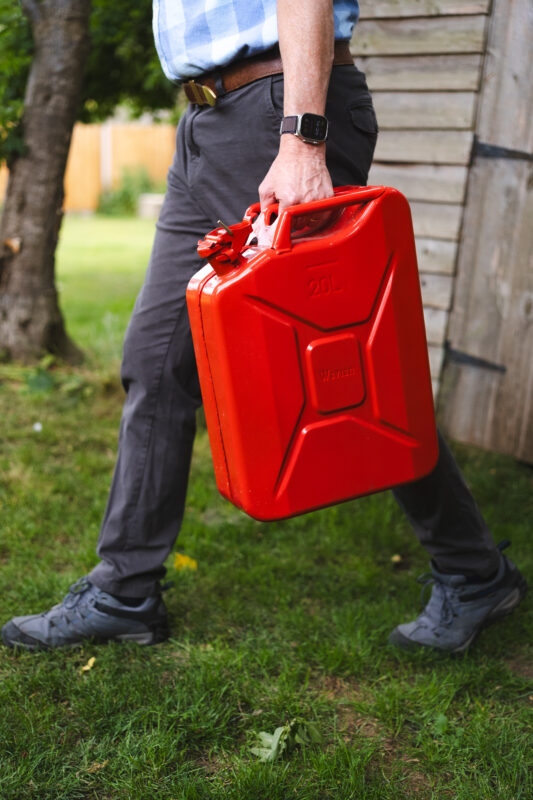
Feb
Storing fuel at home can be convenient, but it needs to be done correctly. Petrol and other fuels are highly flammable, and incorrect storage can lead to leaks, dangerous fumes, fire risks, or even legal issues. Whether you store fuel for gardening equipment, generators, or road trips, following proper safety guidelines is essential.
This guide explains how to store fuel safely at home, what containers to use, and the key rules you should always follow in the UK.
Why safe fuel storage matters
Fuel vapours ignite far more easily than liquid fuel itself. Even small mistakes – such as using the wrong container or storing fuel in an enclosed space – can increase the risk of fire or health issues.
Safe storage helps to:
- Reduce fire and explosion risks
- Prevent fuel leaks and spills
- Avoid harmful fumes in living areas
- Ensure compliance with UK regulations
Using the right equipment and following a few simple rules makes fuel storage far safer and more manageable.
Use the correct fuel container
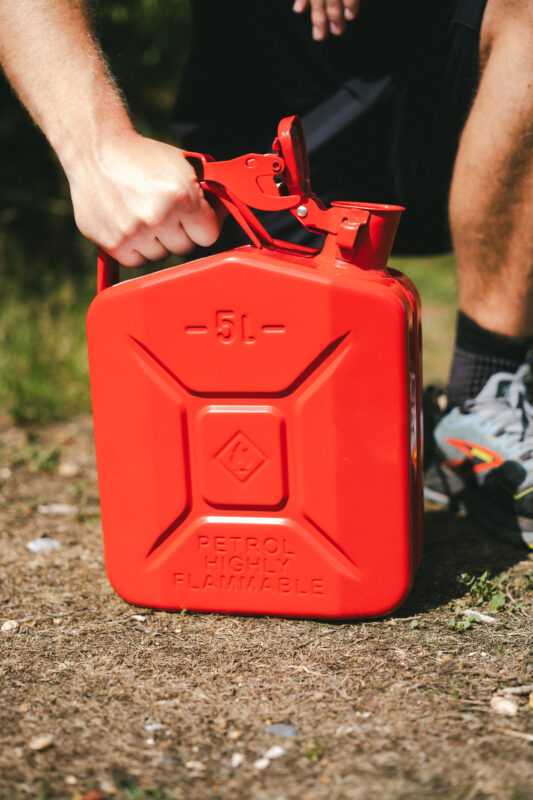
Fuel should only be stored in containers specifically designed for the purpose. Household bottles, open tubs, or unapproved plastic containers are unsafe and can degrade over time.
A proper fuel can should:
- Be clearly marked for fuel storage
- Have a secure, leak-proof seal
- Be made from materials suitable for petrol or diesel
- Include a controlled pouring system
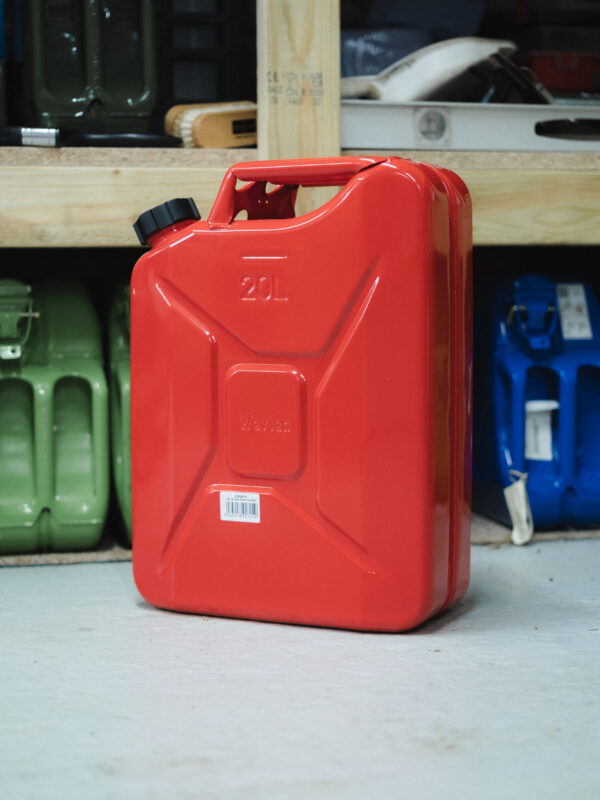
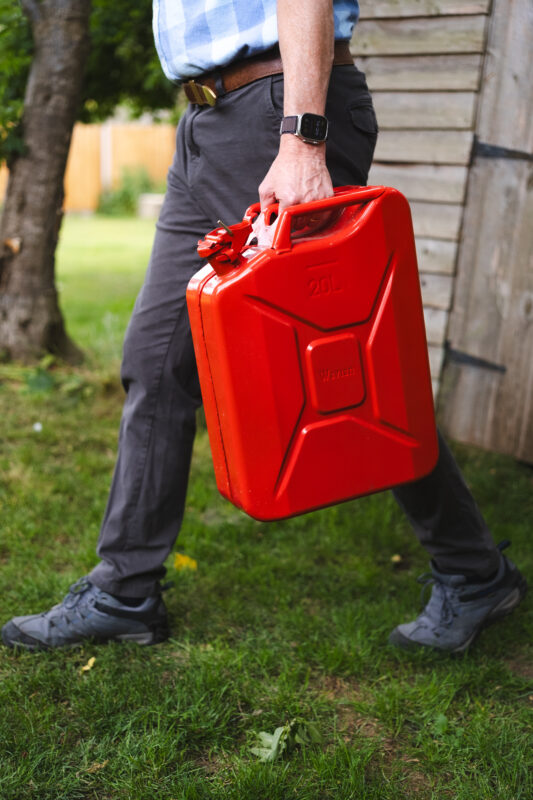
Our high-quality, purpose-built fuel cans are designed to minimise vapour escape, reduce spillage, and withstand repeated use – making them the safest option for home storage.

Store fuel in a safe location
Where you store fuel is just as important as how you store it.
Fuel should be kept:
- In a cool, well-ventilated area
- Away from living spaces such as kitchens or utility rooms
- Away from naked flames, heaters, or electrical equipment
- Out of direct sunlight
Garages and outdoor sheds are usually the safest places, provided they are ventilated and not connected directly to the main living area of the home.
Keep fuel containers sealed and upright
Fuel cans should always be stored:
- Fully sealed
- Upright and stable
- On a flat surface
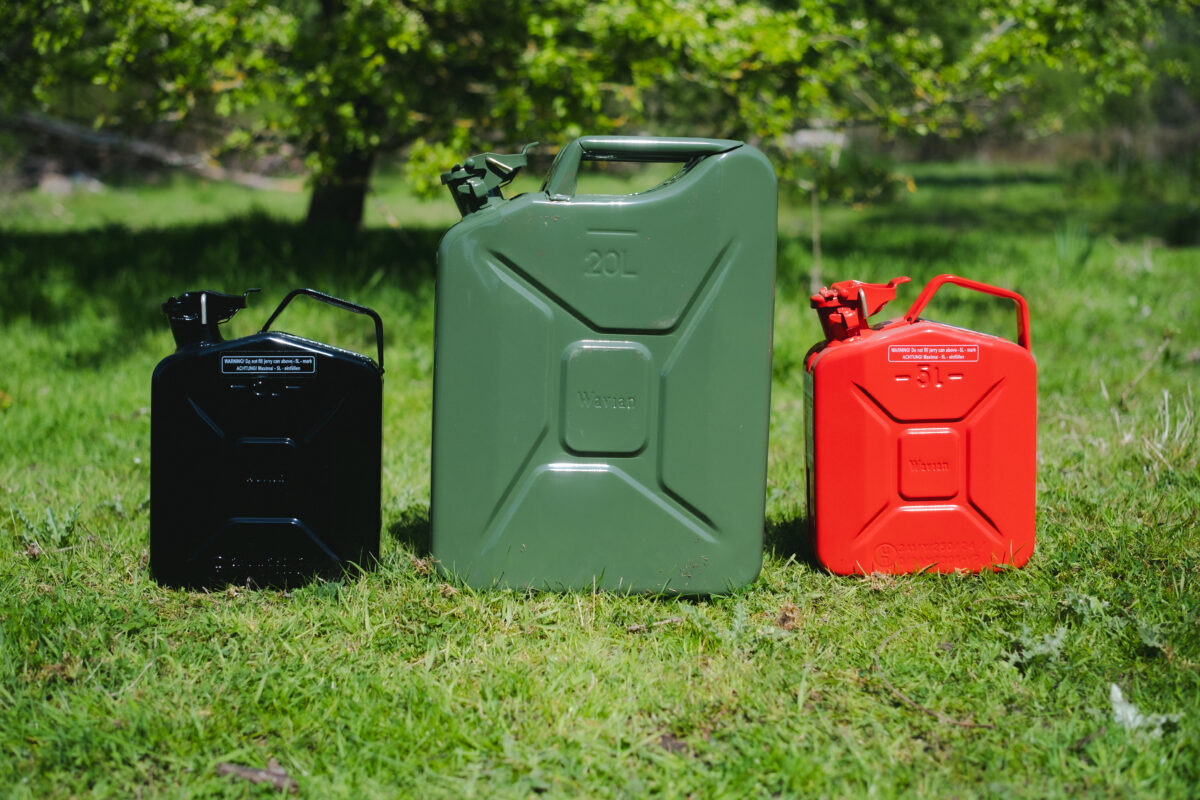
A wide, stable base reduces the risk of the container tipping over, which helps prevent spills and leaks during storage or transport. Stability is especially important if fuel is being stored in a vehicle, shed, or shared space. For enhanced stability, take a closer look at our latest product the Hippo Can.
Follow UK fuel storage limits
In the UK, there are limits on how much petrol you can store at home.
For most domestic users:
- Petrol must be stored in approved containers
- Quantities should be kept to the minimum needed
- Containers should be clearly labelled
Always check current UK guidance to ensure you remain compliant, especially if storing fuel for work or commercial use.
Final thoughts
Storing fuel safely at home doesn’t have to be complicated, but it does require the right approach. Using proper containers, choosing safe storage locations, and following UK guidelines significantly reduces risk and improves safety.
Our high-quality fuel cans are designed to make storage, handling, and transport safer and easier – giving you confidence that your fuel is stored correctly.
By following these best practices, you can store fuel at home responsibly, safely, and with peace of mind.

Looking to purchase metal 10lt jerry can to store diesel fuel for my generator. Please confirm requirements and storage period (will be stored in my garage)
Hi Chris,
Thank you for your enquiry.
You can expect to receive an email from us shortly regarding your enquiry.
Kind regards,
The Wavian Team
How full should I fill the 10 litre metal can? When it is full up to the level of the bottom of the filling hole, or just under where the sloping front starts; does it have 10 litres in it?
Hi Catherine,
Jack from our sales team is going to send you an email in a minute explaining the best way to fill it!
Thanks,
Harry